The Arbor
Project Details
A comprehensive redesign of the Griffith University Nathan Campus' study space.
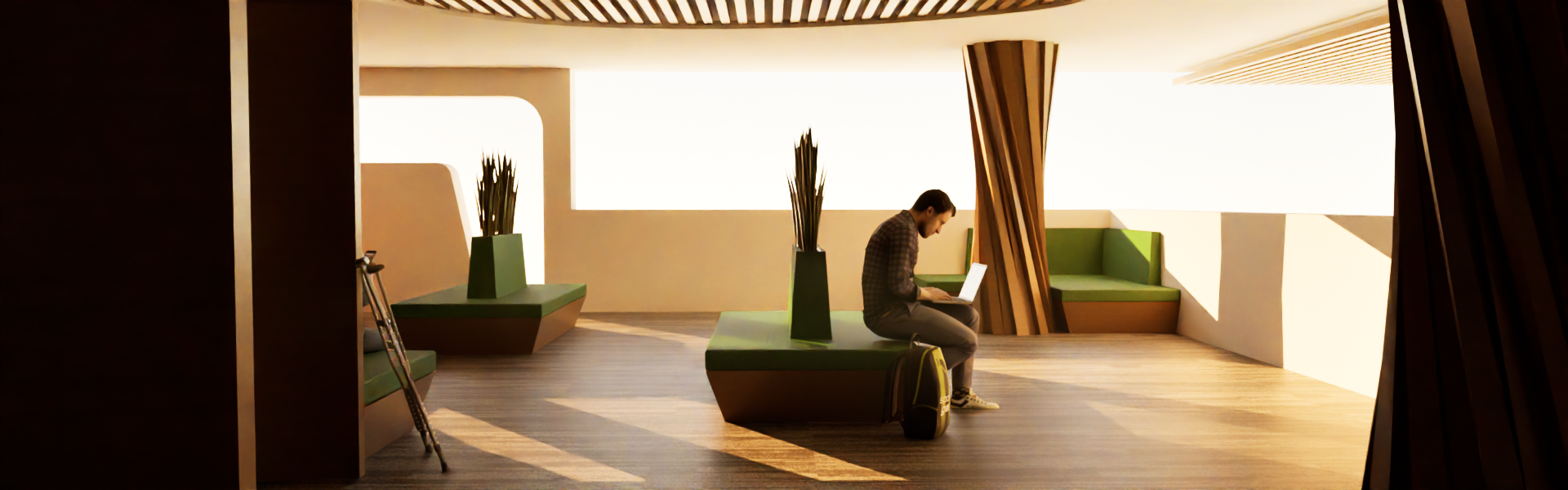
A communal study space prioritising accessibility, health and wellbeing located among the Toohey Forrest.
The Issue
To address critical issues impacting student mental health, wellbeing, and engagement on campus in study spaces. The original environment was found to be uninviting, visually sterile, and disconnected from both its users and the natural surroundings of the campus.
The Solution
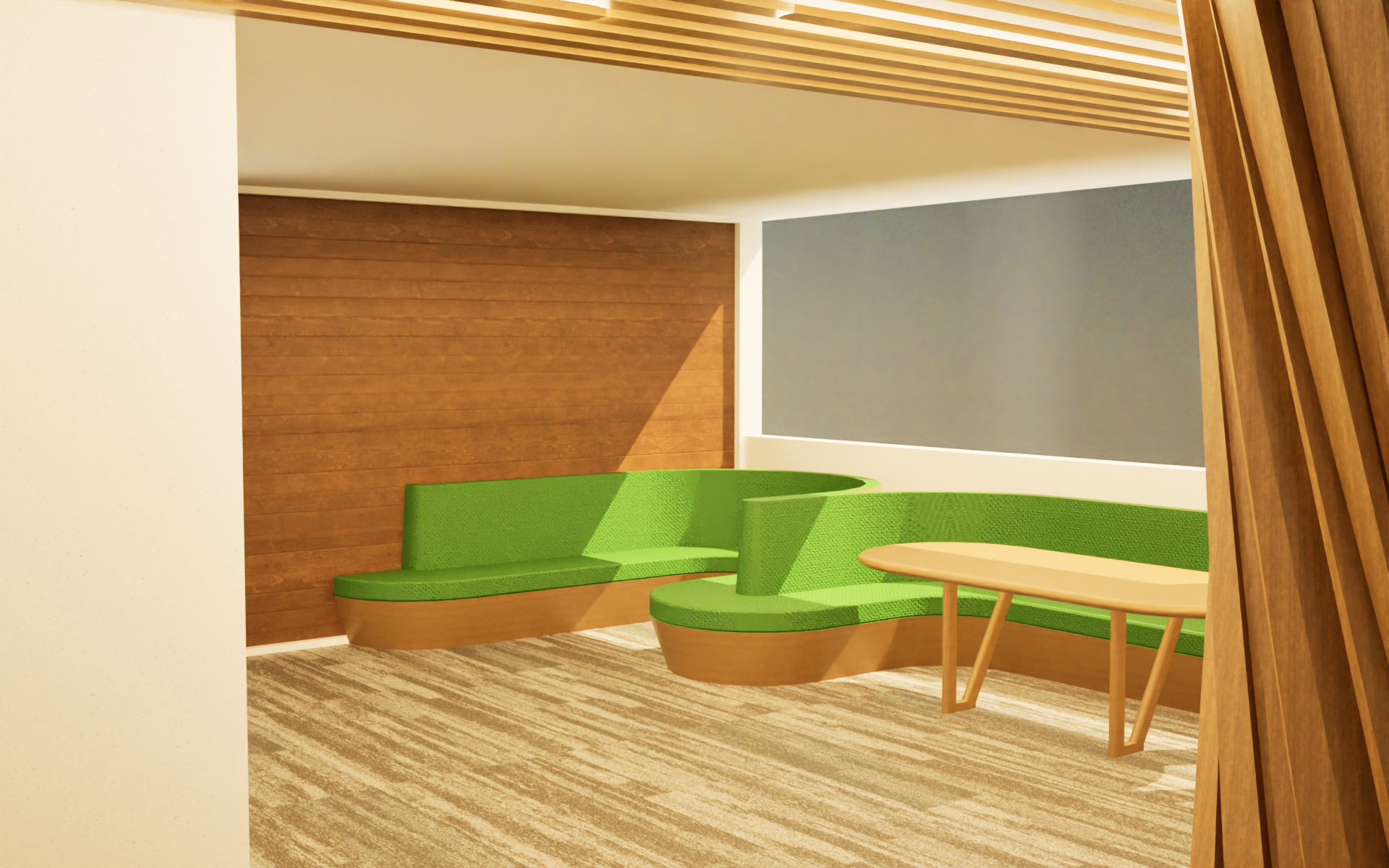
The redesigned space introduces principles of biophilic and inclusive design, aiming to bring the outdoors in through the use of locally-sourced natural materials, organic forms, and a warmer, more tactile palette. Lighting has been softened and diversified to reduce sensory fatigue, while the spatial layout has been completely reimagined with purposeful zoning that supports a variety of study needs – from solitude through collaborative work.
The Reasoning
Informed through sensory mapping and accessibility standards, the design prioritises thermal comfort, acoustic balance, and visual warmth. It seeks to offer all students – regardless of ability or background – a welcoming inclusive environment that fosters calm, clarity and connection. Ultimately, this is not just a renovation, but a restorative transformation that acknowledges the essential role of space in supporting student wellbeing.
325.5m²
2025
Completed, Proof-of-Concept
Revit, SketchUp, TwinMotion, Photoshop, Illustrator
Total Area
Date Completed
Project Status
Tools Used


Importance of Natural Lighting
Natural Light plays a critical role in shaping healthy and productive interior environments, particularly in spaces dedicated to studying and office work. numerous studies have shown that exposure to daylight supports circadian rhythm regulation, improves mood, and enhances cognitive function – all essential for focus and sustained mental performance.
In academic and professional settings, access to natural light has been linked to increased concentration, reduced eye strain, and lower levels of stress and fatigue. Students and workers in daylight-rich environments tend to report higher satisfaction, particularly important in enclosed spaces where artificial lighting often dominates and can contribute to a sense of disconnection from the outside world.
Designing interiors to maximise daylight not only promotes wellbeing but also reduces reliance on artificial lighting, supporting energy efficiency and sustainability. This can be executed through window placement, light wells, reflective surfaces, and open plan designs. Where this is not achievable however, non-natural lighting must be utilised.
Imitation Natural Lighting
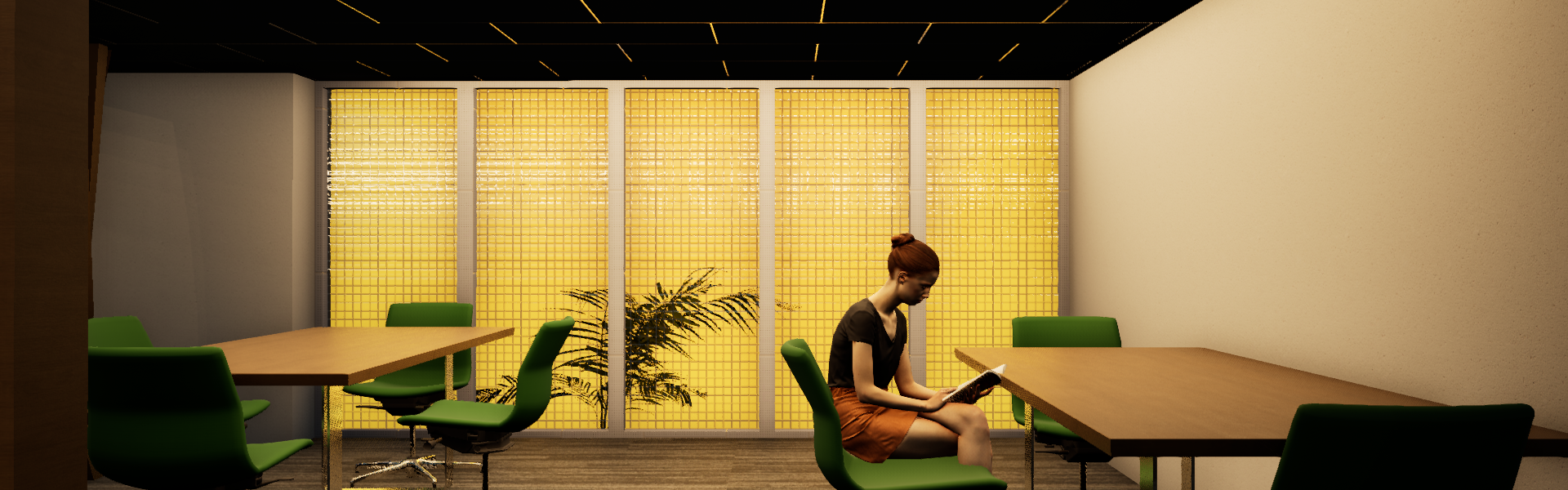
In windowless offices and study environments, the absence of natural light can have an impact on mental wellbeing, cognitive performance, and circadian health. One innovative solution to this challenge is the use of artificial lighting systems that simulate the natural sun-cycle. These systems typically take the form of light-emoting panels designed to resemble window panes, subtly shifting in colour temperature and intensity to mirror the progression of daylight.
Such lighting offers a range of benefits. Psychologically, a dynamic light source that mimics natural daylight reduces the sensation of confinement and disorientation commonly experiences in enclosed spaces. It creates a sense of connection to the outside world, even when none exists. This can significantly improve mood and reduce symptoms of stress or fatigue.
From a cognitive perspective, exposure to circadian lighting has been shown to improve alertness, concentration, and memory retention (Folkard & Monk, 1980). Morning-like light supports wakefulness and productivity, while warmer evening tones help signal the body to wind down, supporting healthy sleep cycles.
In terms of energy output, many modern circadian lighting systems use energy-efficient LED technology, which hallows for dynamic control and minimal power consumption. Although initial setup may involve higher up-front costs, the long term benefits, both in term of energy use and increased wellbeing, make it a sustainable investment.


